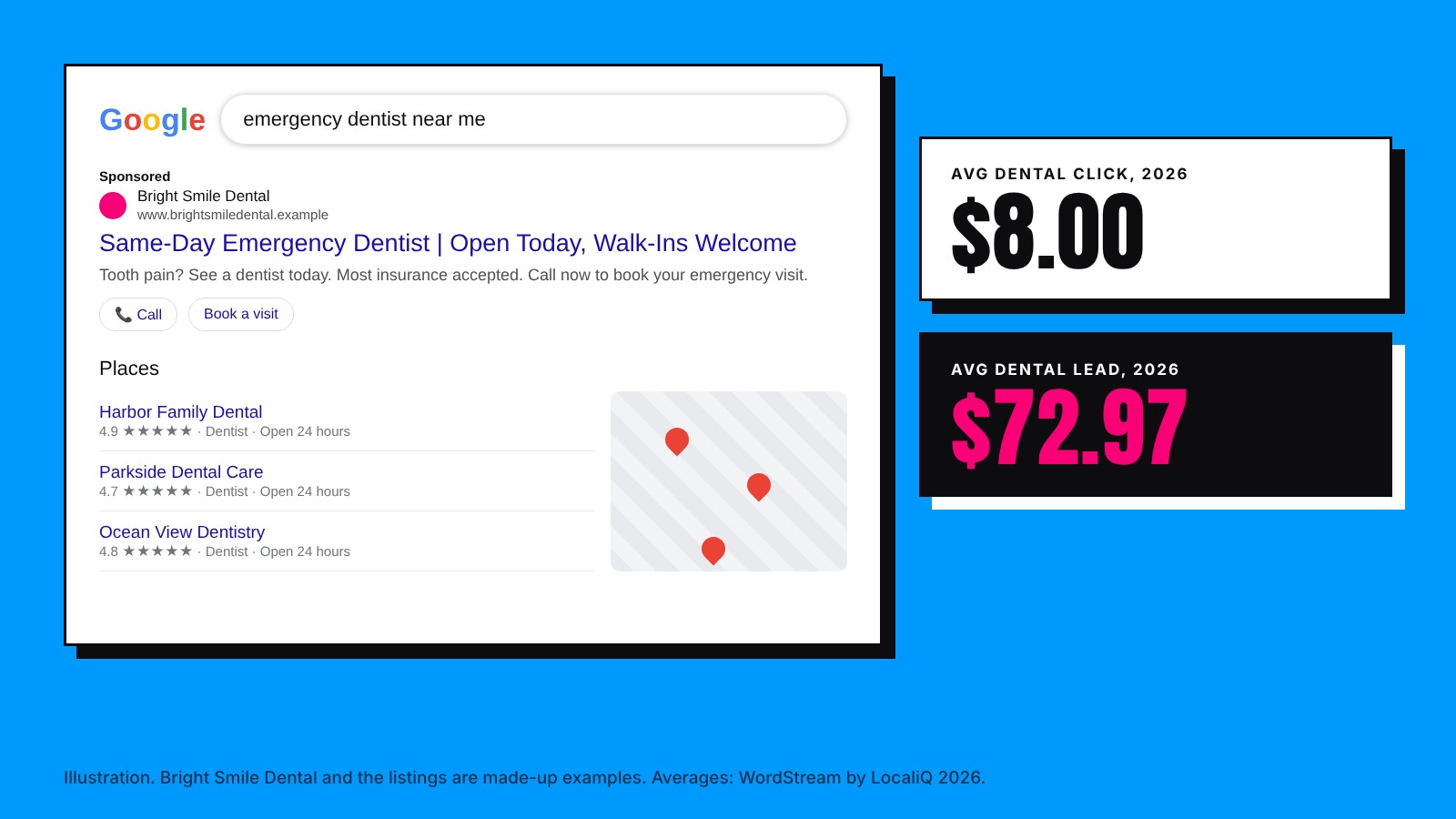
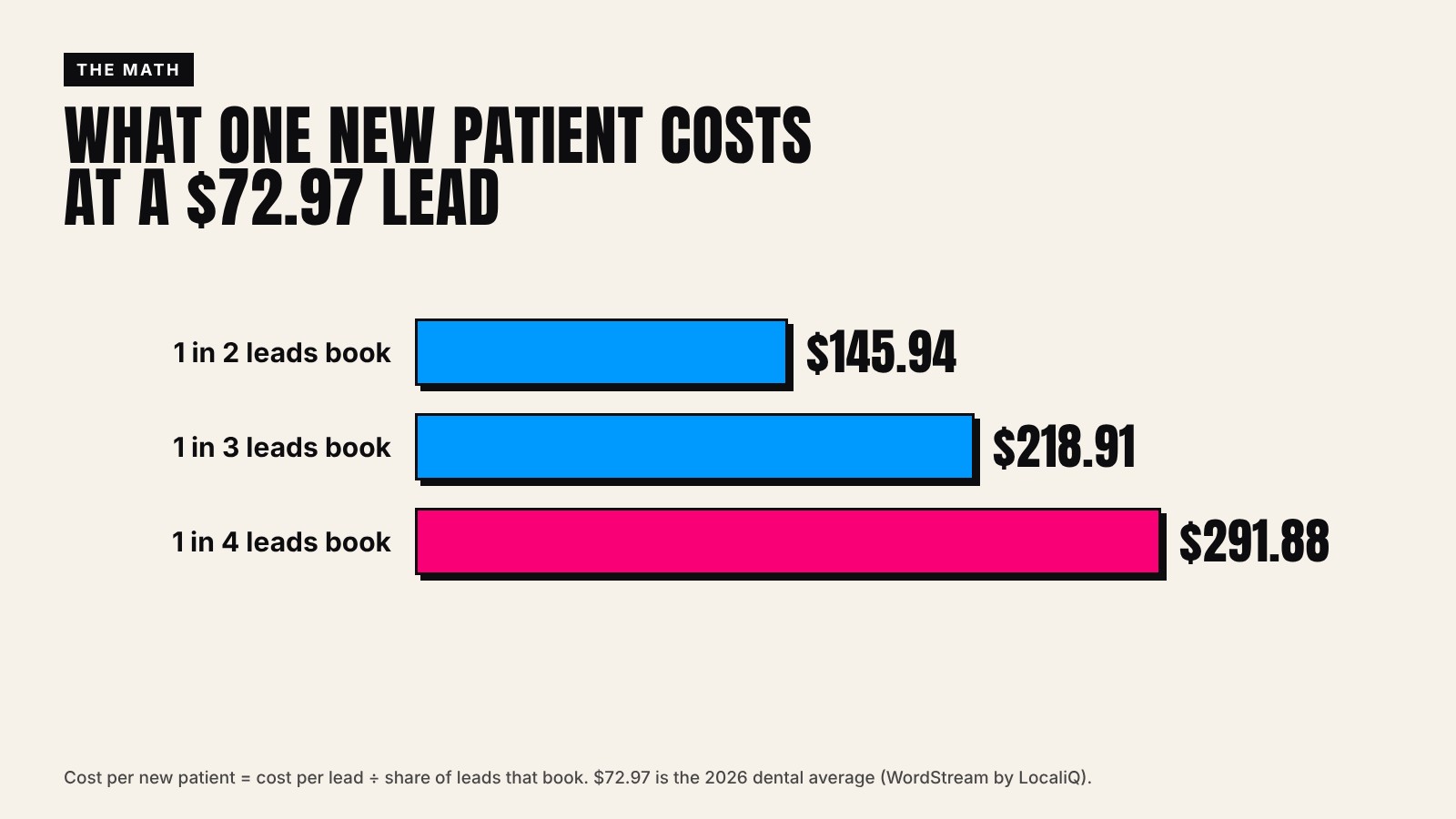
Google Ads is worth it when a new customer costs less than the profit that customer brings you. Divide your cost per lead by the share of leads that book. At the 2026 dental average of $72.97 a lead, if half your leads book, each new patient costs $145.94. If that patient is worth more than that to you, the ads pay.
- Worth it means cost per new customer is lower than what a customer earns you.
- Cost per new customer = cost per lead / share of leads that book.
- 2026 average leads: dentists $72.97, home improvement $90.92, law firms $131.63.
- Answering the phone fast changes the math more than any bid setting.
"Is Google Ads worth it?" has a real answer, and it is not "it depends." It is one division problem. Once you run it with your own numbers, you will know whether to start, stop or fix what you have.
The one number that decides it
Forget clicks and impressions for a moment. The number that decides whether ads are worth it is what one new customer costs you. You get it like this:
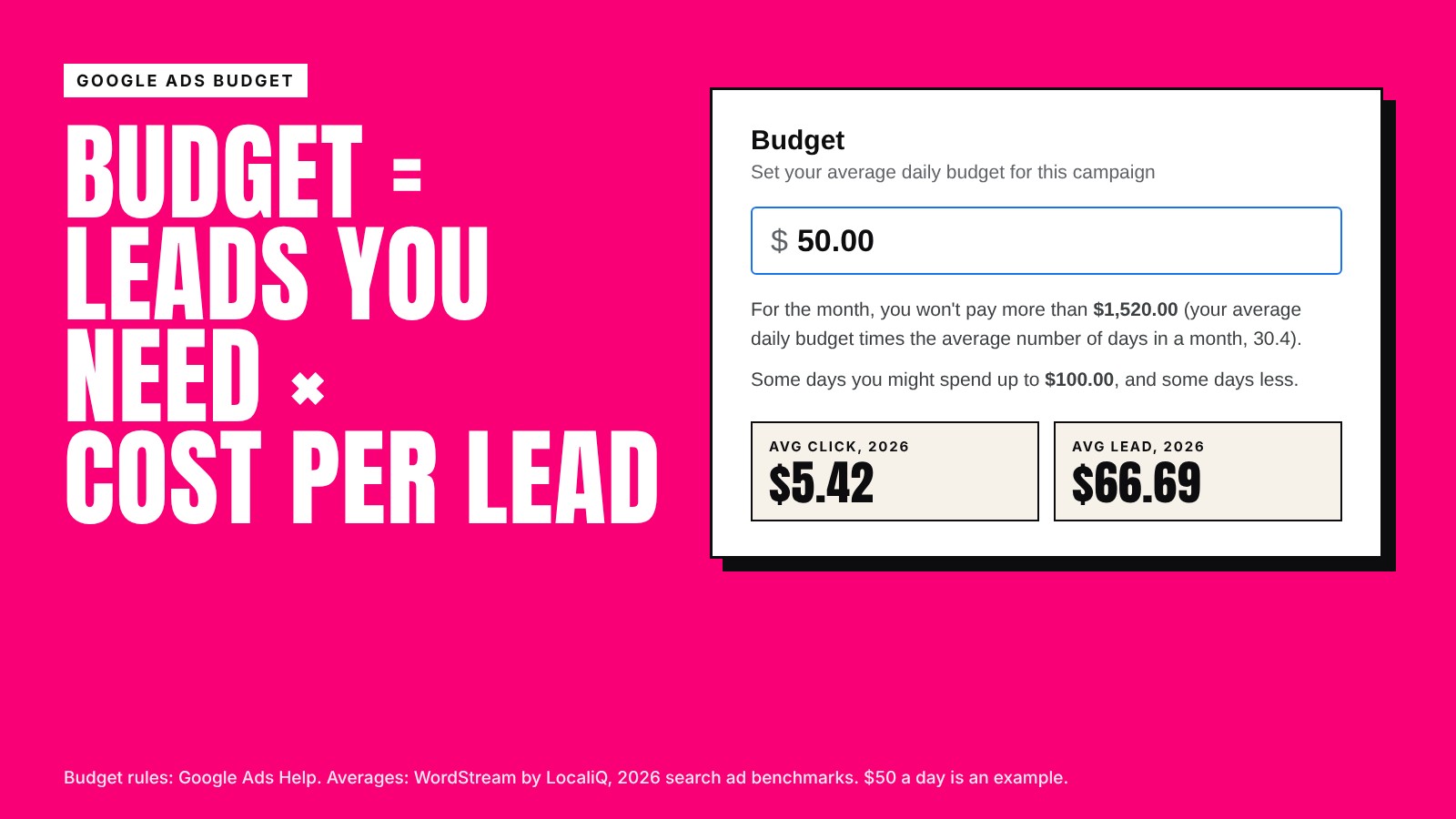
- Find your cost per lead. If you are not running ads yet, start with your industry's 2026 average from WordStream by LocaliQ: $72.97 for dentists, $90.92 for home improvement, $131.63 for law firms, $66.69 across all industries.
- Know your booking rate. Out of every 10 calls or forms, how many become a booked job or patient? Look at last month, not a guess.
- Divide. Cost per lead / booking rate = cost per new customer.
- Compare. If one new customer earns you more than that, the ads are worth it. If not, fix the leak before you spend more.
Why your booking rate matters more than your click price
Look at the chart. The click price did not change. The lead price did not change. Only the share of leads that booked changed, and the cost of a new patient doubled. Most owners try to fix ads by cutting the click price. The bigger win is usually picking up the phone, calling forms back in minutes, and following up with people who did not book.
If calls go to voicemail after hours, an AI receptionist can answer them. A lead you paid for and never answered is the most expensive lead there is.
When Google Ads is usually worth it
- One customer is worth a lot: implants, roofs, AC replacements, legal cases.
- People search when they need you now: emergency repairs, tooth pain, a lockout.
- You can answer the phone during the hours your ads run.
- You track calls and forms back to the ad, so you can see what each job cost.
When it is usually not worth it yet
- Nobody answers the phone, or forms sit until the next day.
- Your website is slow on a phone or has no clear way to call.
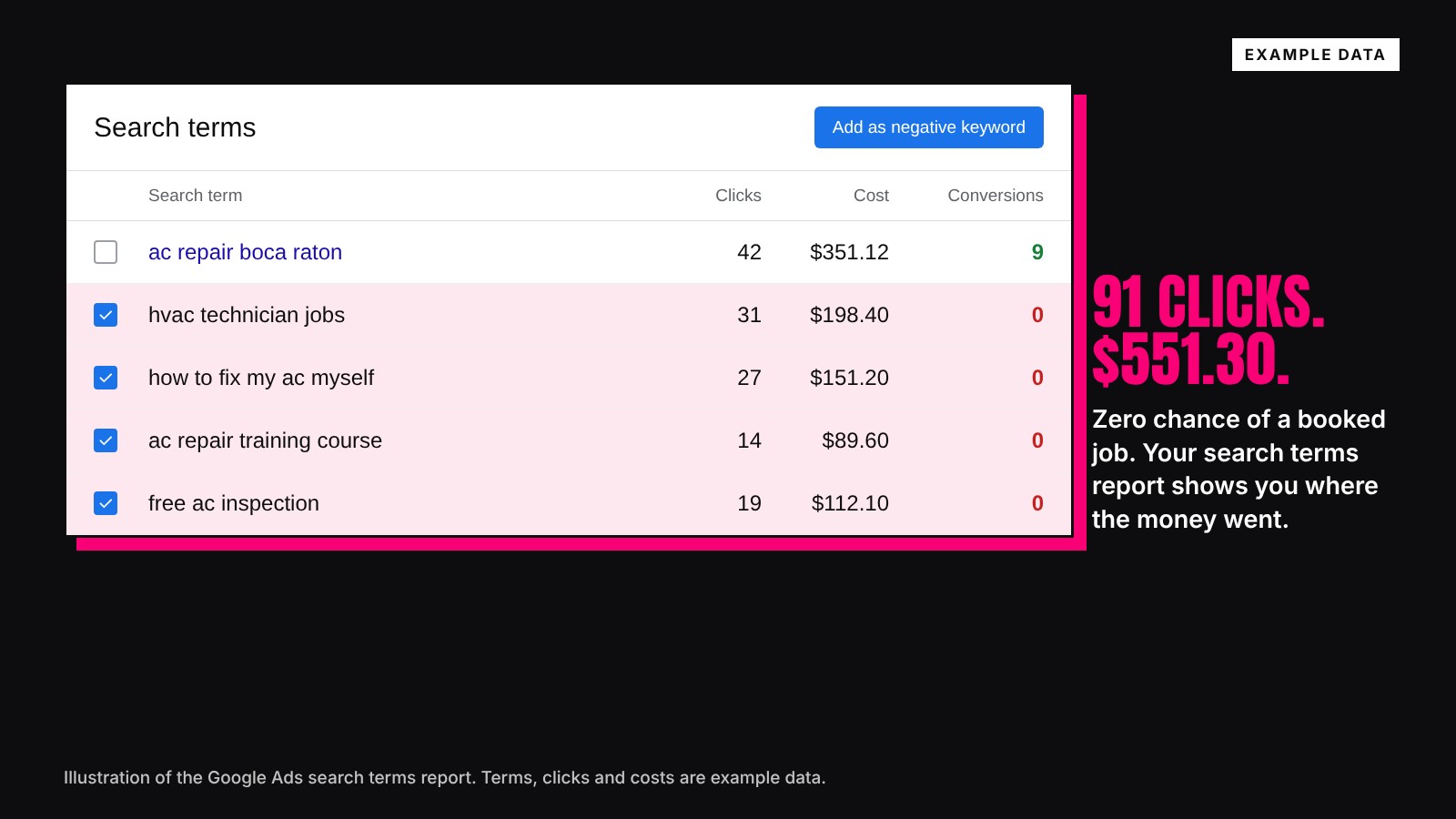
- You cannot tell which calls came from ads.
- One customer is worth less than the going cost per lead in your field.
What real accounts look like
One dental marketing firm looked at 142 practices and found paid search cost $40 per lead, and $65 per new patient lead once brand searches were taken out. On typical home service accounts we run, the average cost per booked job is $68, with a 4.3x return on ad spend. Those are typical figures, not a promise. Your market, offer and follow-up will move them.
Who this is for
This is for owners deciding whether to start Google Ads, or whether to keep paying for them. It covers dentists, home services, med spas and law firms. If you decide yes, read how much to spend on Google Ads next.